
- Home
- Packages
- Tours
- Day Trips
- Trip Styles
Ready to Explore Morocco?
- About Us
- Blog
- Privacy Policy
- Contact Us

- Home
- Packages
- Tours
- Day Trips
- Trip Styles
Ready to Explore Morocco?
- About Us
- Blog
- Privacy Policy
- Contact Us
Morocco Cultural & Heritage Tours: A Journey Through Time
There are two ways to travel through Morocco. You can admire the architecture, snap a photo of the souks, and head back to the hotel. Or you can travel with someone who actually translates what you’re looking at, why that geometric pattern is carved into a cedar door, why the old Jewish quarter sits right next to the royal palace, how Berber, Arab, Andalusian, and Jewish history all get woven into daily life here.
If the second version sounds more like you, you’re after a cultural tour, not just a sightseeing one. Morocco sits at a genuine crossroads of civilisations, Amazigh tribes, Roman conquerors, Arab dynasties, Sephardic Jews fleeing the Spanish Inquisition, and Sub-Saharan traders. Understanding the country means peeling back a few of those layers.
What Actually Happens on a Cultural Tour?
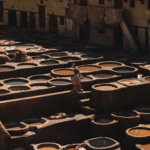
Standard sightseeing rushes you from monument to monument. Cultural tours slow down and focus on living traditions instead: a market visit with a chef before a cooking class in a riad, watching zellige tilework get chiselled by hand in the Fes medina, sharing mint tea with a Berber family in the High Atlas, or hearing Gnawa music, with its deep sub-Saharan roots, in Essaouira. Travelling with friends or family? Culture-focused group tours are a genuinely good way to share these experiences while keeping costs sensible.
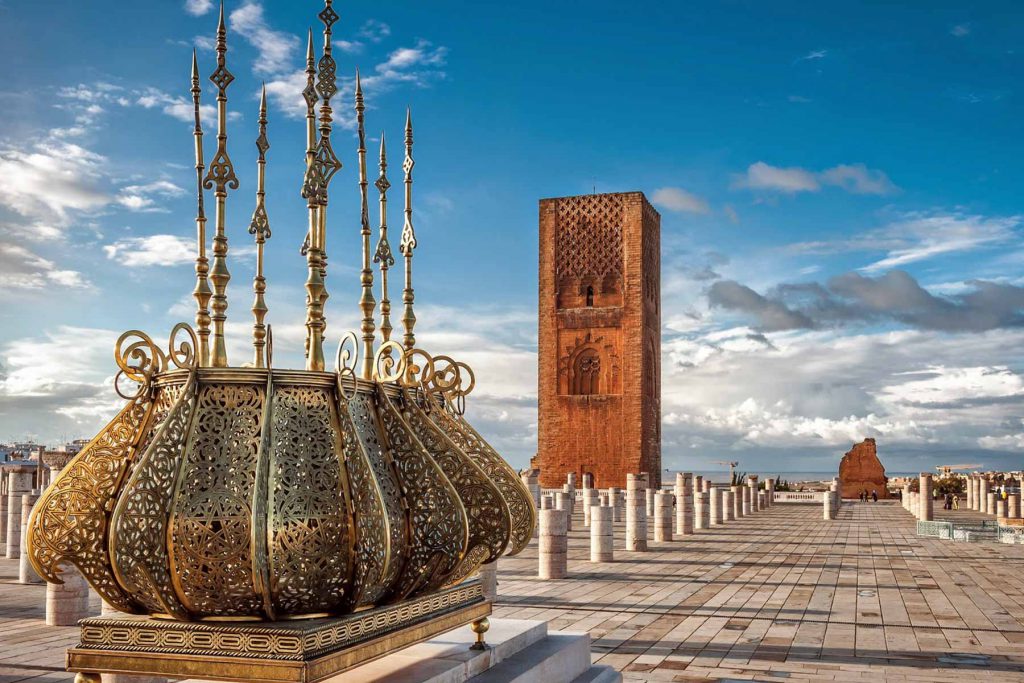
Jewish Heritage in Morocco
One of the most striking threads in Moroccan history is its Jewish heritage, which predates Islam here by centuries. After the Spanish Inquisition in 1492, a wave of Sephardic Jews found refuge in Morocco, and for generations Muslims and Jews shared customs, music, food, and trade. By the mid-20th century, Morocco had the largest Jewish population anywhere in the Arab world, over 250,000 people. Most have since emigrated, but the country has gone out of its way to preserve that history; the Moroccan Constitution itself recognises the nation's Hebraic roots.
A Marrakech Jewish tour typically centres on the Mellah, the Jewish quarter dating to 1558, the still-active Lazama Synagogue, the beautifully maintained Miâara Cemetery, and the old spice and jewellery markets. In Casablanca, home to the country's largest remaining Jewish community, tours usually take in Temple Beth-El and the Museum of Moroccan Judaism, the only museum of its kind in the Arab world, plus genuinely good kosher food. Fes holds the very first Mellah in Morocco, established in 1438, and was once home to the philosopher Maimonides, while Essaouira, once known as Mogador, actually had a Jewish majority at one point in the 19th century.
Because so much of this history is buried in detail, a general sightseeing guide usually isn't enough. A specialised guide knows where the old kosher bakeries stood, which families still hold the keys to remote synagogues in the Atlas, and the significance of the hiloula pilgrimages scattered across the countryside. Seekers Travel Morocco pairs travellers with licensed guides who specialise specifically in this history.
Planning Your Trip
Cultural tours involve a lot of walking, so spring (March–May) and autumn (September–November) are the best windows weather-wise. Seven days gets you a solid overview of the imperial cities; 10 to 14 days lets you add the Kasbah route, the Atlas, and the coastal history of Essaouira or Tangier. Check our multi-day packages for ideas.
Private tours tend to work best for heritage travel, since you can linger at a museum or detour to a specific site without a group waiting on you. That said, we regularly organise custom group tours for congregations, alumni groups, and historical societies without losing that depth.
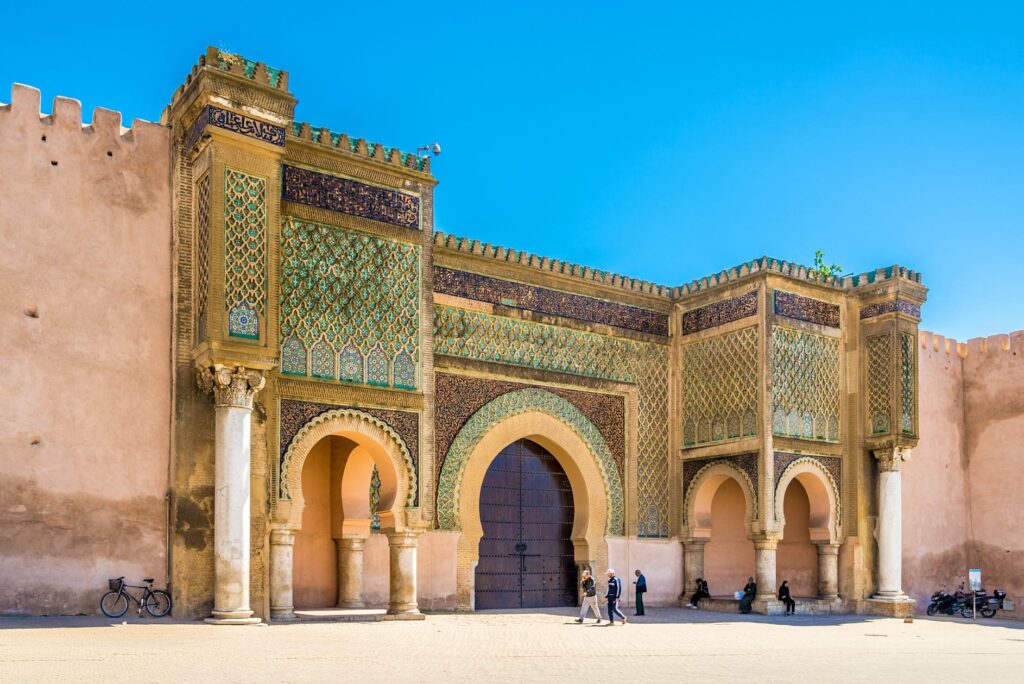
Beyond the Cities: Kasbahs and the South
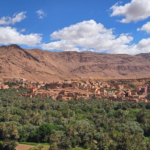
Not all of Morocco’s heritage sits in the imperial cities. South of Ouarzazate, the so-called Route of a Thousand Kasbahs runs into the desert, taking in Aït Ben Haddou, the most famous ksar in the country, and the Telouet Kasbah, once the seat of the powerful Glaoui family, its crumbling mud-brick exterior hiding genuinely striking Andalusian mosaics inside. A tour from Ouarzazate is the natural starting point for exploring this rural, Berber side of the country’s heritage.
Where Heritage Tours Go Deeper
Heritage tours lean harder into history and architecture. Morocco’s four imperial cities, Marrakech, Fes, Meknes, and Rabat, were each shaped by a different dynasty, and a proper heritage tour walks you through that rise and fall. You’ll stand in madrasas where students studied astronomy in the 14th century, walk the Roman ruins at Volubilis, and explore the Kasbah of the Udayas, where Andalusian refugees built a pirate republic in the 1600s. The history’s dense enough that unpacking it solo is genuinely hard; this is where a specialised, licensed guide earns their fee.
Why Seekers Travel Morocco
We’re not an international agency working off a script; we’re a Moroccan team with offices in Ouarzazate, Marrakech, and Casablanca, and this history is our own. Book a heritage tour with us, and you’re not just getting a driver; you’re getting matched with the right specialist, whether that’s someone deep in Roman antiquities at Volubilis or a dedicated Jewish heritage guide for Fes and Marrakech.
Ready to Trace Morocco's Past?
From the blue walls of Chefchaouen to the grand synagogues of Casablanca, from Roman ruins in the north to Berber kasbahs in the south, Morocco is built on layered stories. Explore tours from Marrakech, Fes, Casablanca, Tangier, Ouarzazate, and Agadir, or see all packages. Then get in touch and tell us what you want to learn.